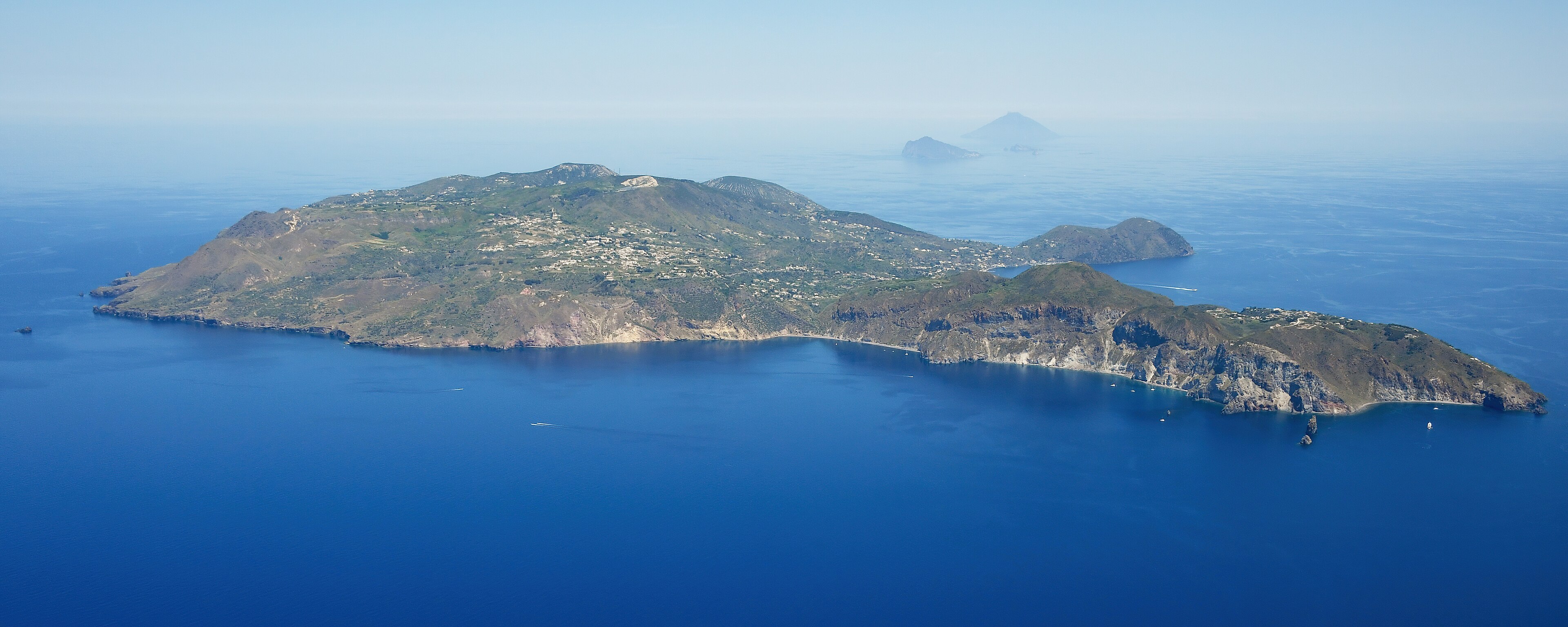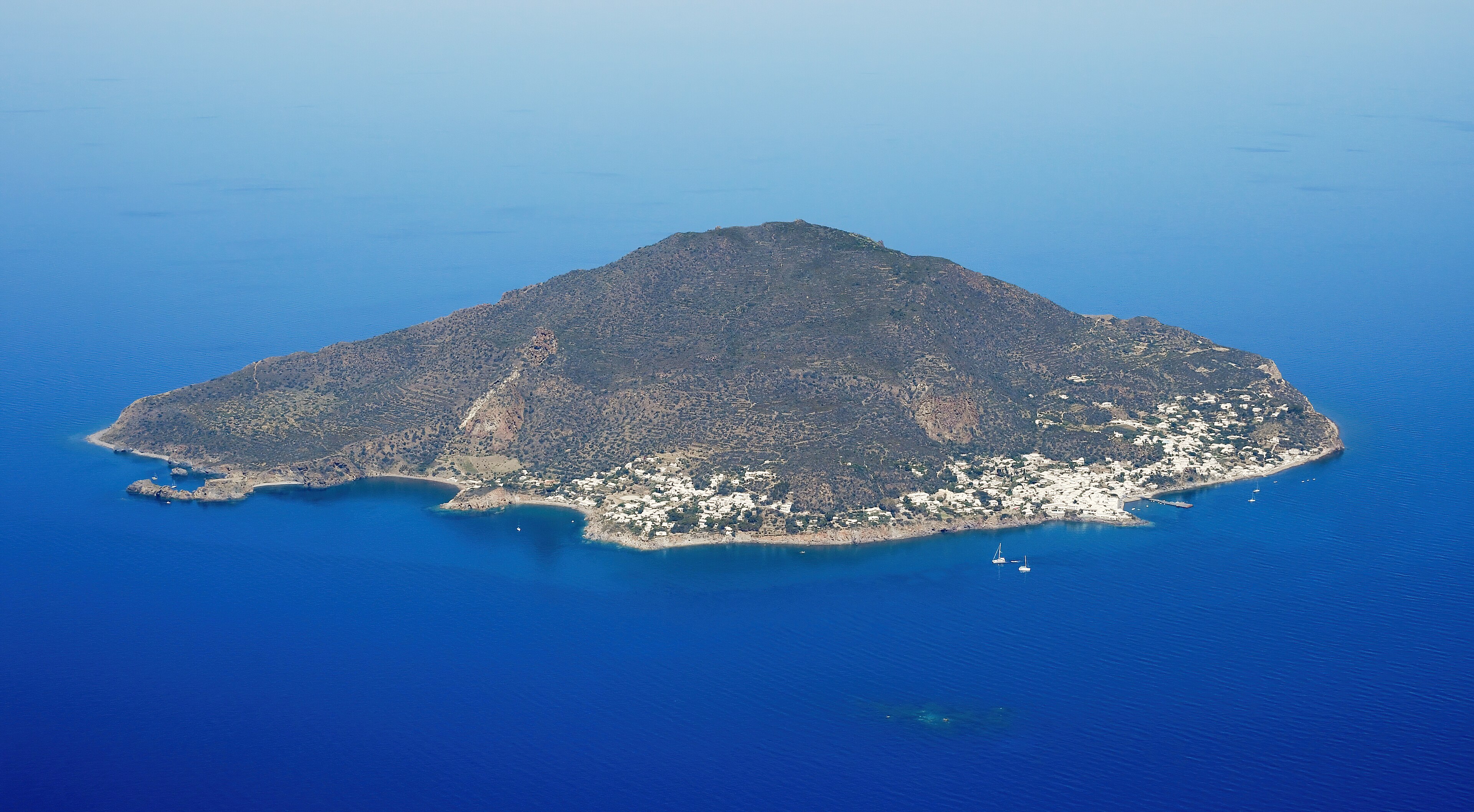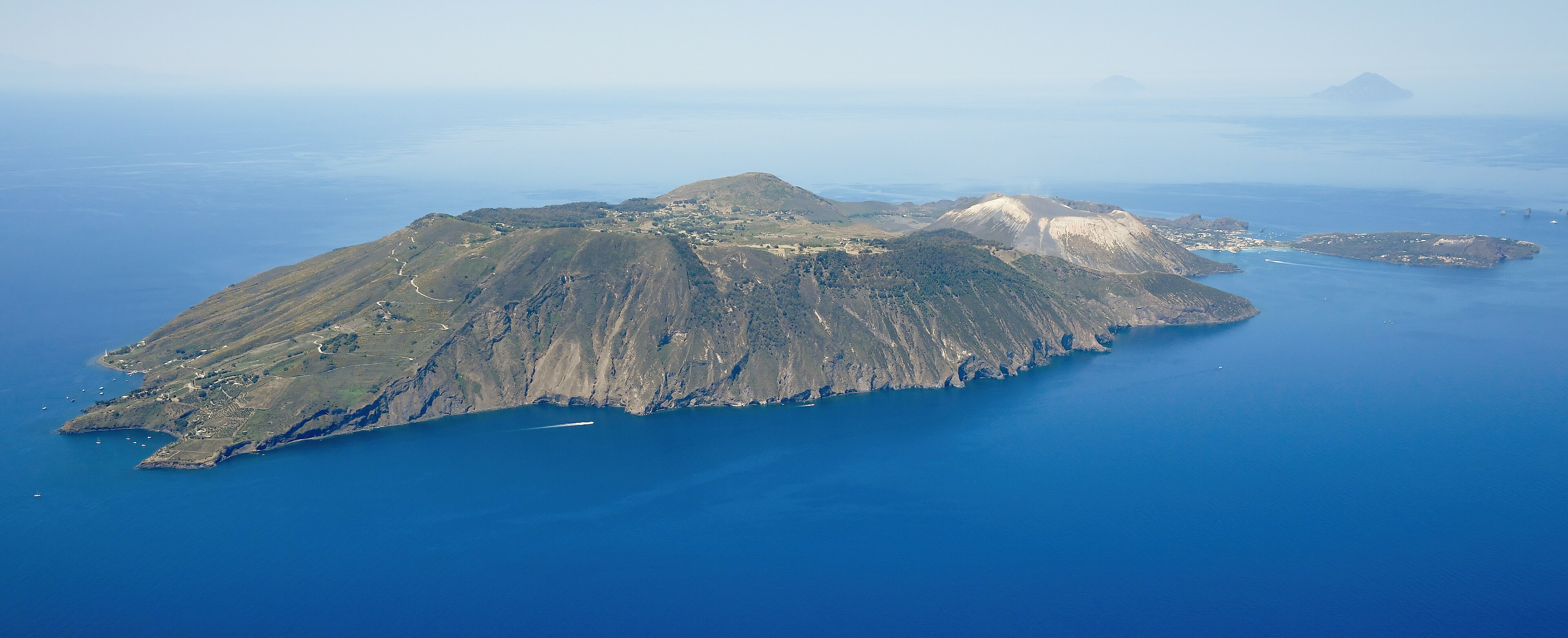
Vulcano from the sea: the black-sand bay, the caves, the mud
The Faraglione, the Grotta del Cavallo, the open-air thermal pools. Vulcano from the sea is less touristy than the side you see from the harbour — it's one of the three days on the Seven Islands Tour, and the one that wins everyone over.
Lipari + Vulcano: one of the tour’s three days
From Lipari to Vulcano it’s barely 15 minutes of sailing — practically next door. That’s why Lipari + Vulcano is one of the three days on the Seven Islands Tour: we cast off from Marina Corta at 10:00, run along Lipari with a swim in the coves below the pumice quarries, and cross to Vulcano while the western coves are still empty. You swim at both islands.
But Vulcano from the sea is a different thing from Vulcano seen from the harbour. What the average tourist knows is the “Black Sand Beach” and the sulfur mud baths. What we do are the coves on the western side, the submerged caves, and the thermal seabed few people know about.
Stop 1 — The Faraglione and Grotta del Cavallo
Heading south from Lipari, the first thing you see is the Faraglione di Vulcano, the rock spire jutting off Punta Lentia. It’s a classic: it’s the rock that appears in every photo of the Aeolians. We pass it slowly.
Right after, hugging the western wall, we enter the Grotta del Cavallo — a sea cave about fifteen metres deep where the water turns electric blue from the sun’s refraction. The stop is 20 minutes, engine off.
Stop 2 — Piscine di Venere
Right after the cave, we reach the Piscine di Venere (Venus’s Pools): a series of natural inlets with shallow, completely transparent water and a sandy bottom. They’re the most well-known natural pools on Vulcano and reachable only by boat — there’s no direct land access.
A stop of about 1 hour. Time for:
- Swimming (water at 24–26°C in high season)
- Snorkeling (you can spot bream, salema, the occasional grouper if you’re lucky)
- Aperitivo on board: sparkling wine, Malvasia, Mario’s arancini
Stop 3 — Spiaggia dell’Asino
Continuing southwest we reach Spiaggia dell’Asino (Donkey Beach), one of the most secluded coves on the island. It’s also accessible from land but via a steep 25-minute trail, so it stays uncrowded.
By sea you arrive in 10 minutes from Piscine di Venere. The beach is light sand with a few stones; behind it rises the green flank of Monte Saraceno.
A stop of 30–40 minutes for those who want a second swim or to rest.
Stop 4 — Black Sands and mud
Around 12:30–1 p.m. we move toward the Porto di Levante bay, where the famous Spiaggia delle Sabbie Nere (Black Sand Beach) is, and next to it, the area of the sulfur mud baths.
You can stop here for:
- A swim at the black sands (short stop, 30 min)
- Thermal mud on the shore (1.5 hours if you want the full experience)
Important: the mud baths are forbidden to children under 12 by law (sulfur + temperature). Families with kids can still swim at the black sands.
The smell of sulfur here is strong. It lingers a little even after leaving the island — that’s part of it. Whoever can’t bear it can stay on board during this stop.
Stop 5 — Thermal swim in the sea
The last stop is the least known: about 200 metres from shore, above the underwater hydrothermal vents, the seawater is naturally warm (32–38°C in some spots) from vapours released by the seabed.
You can see it from the surface: the water “bubbles” lightly, forming fine bubbles like sparkling mineral water. You swim above it, and the feeling is being in an open-air thermal bath, in the sea.
A stop of 30 minutes. It’s the thing most of our guests remember best.
The return
In the early afternoon we dock and go ashore: lunch is free, everyone picks where and what. Then back on board for the last stretch of the day.
The hours
We cast off from Marina Corta at 10:00 am and return between 6:00 and 6:30 pm. It’s a full day, but the sailing takes little out of it: Vulcano is fifteen minutes from Lipari, so nearly all the time is spent stopped — in the water or ashore.
If you need different hours — with very small children, say — the way to do it is the private charter: there, departure and return are yours to set.
If you have more days, the other two are Lipari + Salina — slower, more rural, all capers and Malvasia — and Panarea + Stromboli, the longest, with the volcano at sunset. They’re separate days: they don’t fit into one outing.
What to bring
- Swimsuit + rubber sandals (for walking on the black sand, which heats up)
- SPF 50+ water-resistant sunscreen
- Towel (sulfur stains slightly: better to use a dark one)
- Sun hat, sunglasses
- A throw to lie on the boat
- Water and snacks if you don’t want the onboard aperitivo
Calendar
| Period | Notes |
|---|---|
| May | Water still cool. Swims are short. |
| June | Good. Piscine di Venere are warming up. |
| July | Ideal. Water at 24°C, stable sea. |
| August | Crowded at the Black Sand bay. The western stops stay private. |
| September | Another perfect window. Water still warm, the island empties out. |
| October | Possible until mid-month, with quick swims. |
The smell of sulfur (yes, it’s real)
An honest note: Vulcano stinks. Sulfur is everywhere on the island and clings slightly to clothes and hair. It comes off with a normal shower, but if you have an event that evening, wear dedicated clothes.
To us it doesn’t seem like a defect — it’s part of the island’s identity. But it’s right to know in advance.
Full details of the route are on the Lipari + Vulcano page. To plan the day, message Salvo on WhatsApp or use the AI assistant in the bottom right.
Cover photo: aerial of Vulcano by Carsten Steger — Wikimedia Commons, CC BY-SA 4.0.